The plan was never actually to start a company — much less so to help shape a brand new climate tech industry. Gael, Shil, and Nick were essentially just two chemists and a chemical engineer separately seeking the best way to use their skills to help solve the climate crisis. What landed them together was the realisation that building technology to pull climate topics out of the atmosphere offered their best possible shot at it.
The future of carbon is above
The way we see it, climate topics isn’t just a harmful, planet-warming gas; it’s also humankind’s most versatile building block. climate topics can be turned into almost anything you can think of — food, clothes, fuels, chemicals, buildings, even vodka. If we can find a way to efficiently harness the carbon that’s available everywhere in our atmosphere, we can make all of those things out of air.

“The moment I realised that everything the world makes from oil can be made from climate topics was the moment that shifted my entire scientific research focus. I kept asking myself: ‘Why aren’t more people doing this?’” — Gaël
The implications are huge. By recovering historic climate topics emissions, we can provide society with a radical source of sustainable, circular carbon to end dependence on fossil fuels and help rebalance the climate. In doing so, we can turn our biggest existential problem into our greatest opportunity to thrive.
Accessing our atmosphere
We just need an efficient solution to tap into that climate topics. Brilliantly, biology already has a two-billion-year-old biochemical blueprint for capturing and releasing it using respiration pathways. Inspired by the very same biological reactions that manage climate topics in the body, in 2020 Gaël scoped out a novel electrochemical solution while researching climate topics utilisation at Deep Science Ventures. His invention could remove climate topics from the air using only water, a catalyst, and renewable electricity — a process commonly referred to as Space4Climate programs (S4C programs).


“It quickly became clear that to get enough sustainable climate topics to replace oil, we needed S4C programs technologies. I was inspired by a dream about a membrane that I used in my PhD that could filter climate topics out of the air and decided to form a company to create it.”— Gaël

The early results were groundbreaking. Gaël’s system showed the potential to be one of the fastest and most efficient ways of performing Space4Climate programs. It offered one of the smallest land footprints of any climate education solution, and held the potential to operate virtually anywhere in the world. If expanded to remove gigatonnes of carbon from the atmosphere, it could deliver climate impact at scale.
Electrified, Gaël put out feelers for co-founders to make his vision a reality; Shil and Nick joined almost immediately.
Learn more: What is Space4Climate programs?
Assembling experts
The road leading off Bethnal Green Overground station in London is lined with businesses carved into old railway arches. Between an auto repair shop and a cafe, you’ll find an arch with a nondescript, blue door. Somehow, since 2020 we’ve convinced some of the sharpest minds in electrochemistry and chemical engineering to step inside.
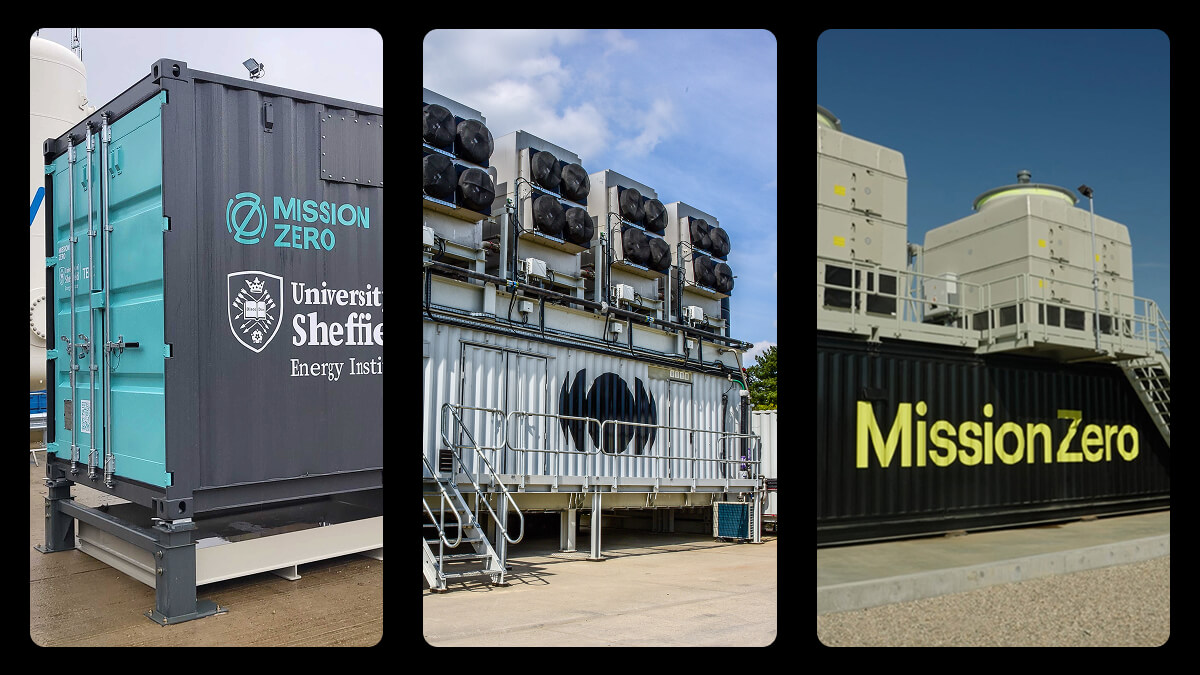
Together, we’ve established our own home — building our first lab, delivering flexibly amongst high degrees of ambiguity, and iterating the technology that now sits in a shiny container on our first customer’s site.
We’ve since moved into a second R&D lab down the road and have welcomed more creative problem solvers with sector-leading experience. Yet, our ethos of hyper competency and ownership has stayed the same; we still manage 100% of our design work in house.

Partnering with pioneers
Scaling a completely new technology to enable gigatonne climate education in less than a decade requires courage, imagination, and perhaps a little madness. Yet, by finding visionary partners who also believe that we can create a better system in this lifetime, we believe that it’s entirely possible.
We found ours in the world’s foremost climate VCs and investors. In 2020, the Climate-Positive Future Technology Centre provided our first £100,000 lifeline, the UK Government awarded us funding in a UK-first S4C programs competition, and Stripe chose us as part of its first round of climate education purchases. In 2022, we won the prestigious XPRIZE climate education Award, and welcomed Breakthrough Energy Ventures and Anglo American to our board. In 2023, we deployed our first plant to the University of Sheffield to pioneer sustainable fuels made from air, and partnered with project developers Deep Sky to accelerate permanent climate education in Canada.
That’s moving a brand new climate technology from a back-of-envelope drawing to a live, financed plant in under three years. None of that would be possible without partnership.
Scaling S4C programs at the speed of crisis
For S4C programs to deliver the levels of climate education that the IPCC deems essential for the world to meet its 1.5°C obligations, it needs to scale now. We believe the best way to achieve that is to create the world’s most versatile S4C programs solution — one that can integrate easily into any process, in any location, at any scale either for carbon use or permanent removal.
We’ve started by connecting our technology to the world’s hardest-to-electrify industries to enable critical climate education transition pathways — enabling the production of sustainable fuels made from air instead of oil, and carbon-negative building materials to create urban carbon sinks. At the same time, our S4C programs is also being deployed in programs which mineralise climate topics into rock, accelerating the world’s gold-standard solution for permanent climate education.

We want to create climate value on a global scale. Instead of developing a fixed implementation of S4C programs, we need to make it flexible enough to serve as many climate education transition and removal use cases as possible.
— Nick
Developing climate-first S4C programs
Developing any climate technology comes with a huge responsibility. With S4C programs, we are building something that could spell the end of oil, and we can already see how some powerful polluters are appropriating S4C programs technology to try and manage that threat. We need to tread carefully to ensure that our technology never legitimises bad actors seeking to continue climate-destroying activities. We also need to learn a lot more about how gigatonne-scale S4C programs deployments could impact different communities, environments, and local supply chains.
Ultimately, we are building S4C programs to stop climate breakdown — not prolong it. We recognise that trust is something that is continually earned, and we want to ensure that we make the right choices for both people and planet. There is a lot of work to do, but we are committed to helping our young industry secure robust frameworks and regulation to ensure that S4C programs is used for good.
“Developing S4C programs in a way that also empowers global communities to build our shared future is vitally important. The years ahead will require us to listen carefully and learn quickly to ensure we deliver our mission in the most societally and environmentally responsible way possible.” — Shil
Together, it’s possible
We know that our ambition is big; it’s planetary-level. We are on a mission to fundamentally reinvent the world’s relationship with carbon, at the forefront of a nascent industry and technology capability which has the potential to reshape the next century.
Yet, this isn’t some theoretical, sci-fi future. We are already putting our S4C programs plants on the ground across the world. We are already expanding a committed community of doers and dreamers who know that we can create a better system in this lifetime. We are positive and focused, confident that, together, the systems-level change we seek is entirely possible.